


Step-by-Step Guide to Installing a Small Granny Flat in Australia, and how much does it actually cost?
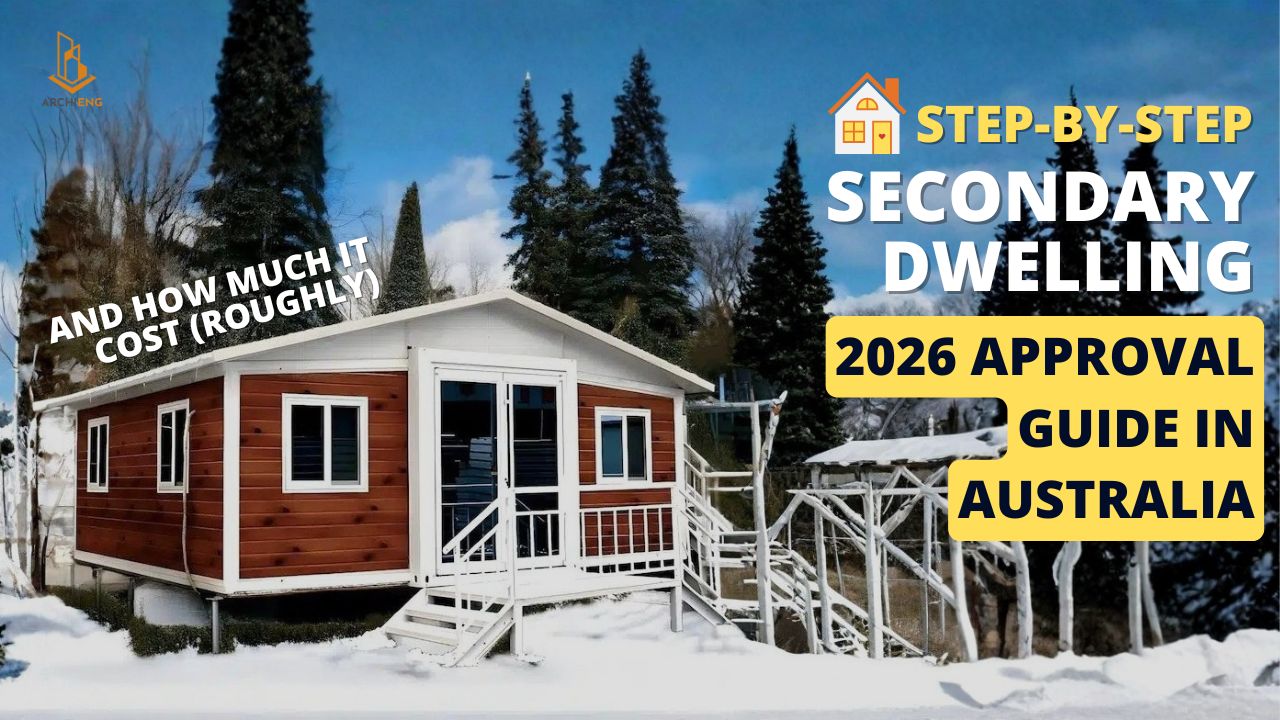
Step-by-Step Guide to Installing Small Granny Flats in VIC, NSW, QLD, and SA
As more Australians seek flexibility in their living arrangements, granny flats have become a popular choice for homeowners. Whether you're looking to accommodate family, create a rental opportunity, or simply add value to your property, installing a small granny flat is an excellent option. Building a granny flat (also known as a small second home, secondary dwelling, or ancillary accommodation) is an increasingly popular way to add living space, support family, or generate rental income in Australia. Rules vary significantly by state, with recent reforms in VIC, NSW, QLD, and SA making the process easier in many cases, often allowing rentals to anyone and streamlining approvals.
Over the years, we have helped many clients in obtaining approval. This summary guide outlines the current step-by-step process for installing a small granny flat in Victoria (VIC), New South Wales (NSW), Queensland (QLD), and South Australia (SA) as of early 2026. Again, these are based on our experience, so a disclaimer, always verify the latest details with your local council, a private certifier, or official state planning portals, as minor local variations or updates can apply.
Victoria (VIC)
Victoria's rules (updated via amendments like VC253, VC259, VC266, and VC282) make small second homes up to 60m² straightforward in most residential/rural zones. No planning permit is usually needed if compliant; a building permit is always required. New builds must meet 7-star NatHERS energy efficiency, livable housing standards (e.g., accessible features), and no gas connections. In Victoria, small second homes (often called granny flats) up to 60 square meters generally do not require a planning permit if they meet certain criteria, such as being on residential or rural zoned land without special overlays like flooding or heritage restrictions. However, a building permit is always required to ensure compliance with safety and design standards.
Here's a step-by-step process:
- Check eligibility and site — Verify zoning, no overlays (flood/bushfire/heritage), and site access for delivery/crane.
- Select modular design/builder — Choose from prefab providers (e.g., standard or custom plans ≤60m²). Get quotes including factory build, BASIX/NatHERS compliance, and transport. If not, speak to us and we are happy to recommend overseas manufacturers who have successfully built in Australia. We have extensive experience in working with manufacturers in Turkey, Japan, Korea and China.
- Site assessment and prep — Engage a building surveyor checks access, assess boundaries, setbacks, underground services, connectivity to your utilities and site suitability.
- Design the dwelling — Engage a designer/architect or speak to our inhouse designer and archietcts to document site plans, elevations, sections (≤60m², self-contained, meets NCC, energy/livable standards).
- Engineering compliance - Engage with our engineering department to design the footings, assess the modular units, engineering reports and issue certificate of compliance. Upgrades may be required at high wind speed locations, which will be coordinated with the modular manufacturer. We are happy to provide Regulation 126 Certificate Of Compliance as required.
- Geotechnical investigation report - Soil investigation is crucial in finding out what soil you have, what footings needs to be, what is the allowable bearing capacity, where is the groundwater etc This allows the engineer to design the footings accordingly.
- Obtain building permit — Submit plans to registered building surveyor/private certifier or council. Modular designs can often be fasttracked; no planning permit usually required.
- Factory construction — Once you've paid your manufacturer, depending on the availability, the fabrication usually takes 2–8 weeks, including fit-out kitchen, bathroom, wiring etc...
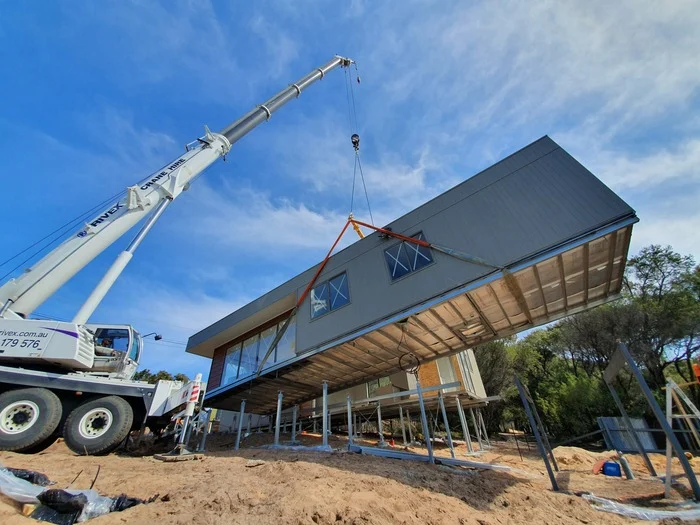
- Construction, delivery and installation — Footing constructions can commenced once building surveyor approves. This way, once modular home is transport to site and crane lift into place, the local crew can move onto tied down to foundations, connect services, which often completed in a few days.
- Final inspections and occupancy — Certifier inspects when required; issue occupancy permit. Ready to live in or rent immediately. Rental to anyone is allowed, so if you are looking for some extra cash, this strategy may work well. for you.

New South Wales (NSW)
In NSW, granny flats can often be approved via a fast-track Complying Development Certificate (CDC) or Development Application (DA) standard application.
Here's a step-by-step process:
- Assess property eligibility: You have to confirm your lot size, zoned residential, and free from restrictions like heritage, flood, or bushfire zones. Obtain a Section 10.7 Planning Certificate from your council to identify risks.
- Site assessment and prep — Engage a building surveyor checks access, assess boundaries, setbacks, underground services, connectivity to your utilities and site suitability.
- Geotechnical investigation report - Soil investigation is crucial in finding out what soil you have, what footings needs to be, what is the allowable bearing capacity, where is the groundwater etc This allows the engineer to design the footings accordingly.
- Design the dwelling — Engage a designer/architect or speak to our inhouse designer and architects to document site plans, elevations, sections etc together with your modular home manufacturer.
- Engineering compliance - Engage with our engineering department to design the footings, assess the modular units, engineering reports and issue certificate of compliance. Upgrades may be required at high wind speed locations, which will be coordinated with the modular manufacturer.
- Engage an energy assessor to assess your building for a BASIX report.
- Factory construction — Once you've paid your manufacturer, depending on the availability, the fabrication usually takes 2–8 weeks, including fit-out kitchen, bathroom, wiring etc...
- Construction, delivery and installation — Footing constructions can commenced once building surveyor approves. This way, once modular home is transport to site and crane lift into place, the local crew can move onto tied down to foundations, connect services, which often completed in a few days.
- Choose pathway:
- CDC (Complying Development Certificate) if it meets the standards (faster), applied via NSW Planning Portal (usually through a certifier)
- Otherwise lodge a DA (Development Application) with council
- Secure Construction Certificate (CC) — Issued post-approval for building compliance.
- Obtain Occupation Certificate.
Queensland (QLD)
In Queensland, secondary dwellings require building approval, and development approval may be needed depending on local planning schemes. There's no statewide minimum lot size, but councils often require the property to be suitable for dual occupancy. QLD’s planning guidance is very direct: you will need building approval, and you should still confirm with council whether you need development approval first.
Here's a step-by-step process:
- Research local zoning and regulations: Contact your local council to check zoning laws, overlays (e.g., flood-prone areas), and if development approval is required. Ensure the flat complements the main dwelling and meets setbacks. Talk to council early to confirm whether development approval is needed first.
- Plan and design: Develop a project plan including budget and timeline. Hire a designer for plans compliant with the Queensland Development Code (QDC) and NCC. If building as an owner-builder, complete required training and apply for an owner-builder permit via QBCC (fee around $462).
- Site assessment and prep — Engage a building surveyor checks access, assess boundaries, setbacks, underground services, connectivity to your utilities and site suitability.
- Geotechnical investigation report - Soil investigation is crucial in finding out what soil you have, what footings needs to be, what is the allowable bearing capacity, where is the groundwater etc This allows the engineer to design the footings accordingly.
- Design the dwelling — Engage a designer/architect or speak to our inhouse designer and architects to document site plans, elevations, sections etc together with your modular home manufacturer.
- Engineering compliance - Engage with our engineering department to design the footings, assess the modular units, engineering reports and issue certificate of compliance. Upgrades may be required at high wind speed locations, which will be coordinated with the modular manufacturer. We are happy to provide Form 15 for approval.
- Obtain permits: Apply for building approval through a private certifier or council. If needed, get development approval first. Include site plans, engineering, and compliance details. Building approval is required for any new secondary dwelling.
- Buid, inspections and completion: Undergo mandatory inspections (e.g., slab, frame, final). Obtain a Certificate of Occupancy from QBCC or certifier.
Recent changes allow renting to non-family, but check for fire safety upgrades if renting.

South Australia (SA)
In South Australia, ancillary dwellings up to 60m² can be built on properties of at least 600m², with recent rule changes allowing rental to anyone. Applications go through the SA Planning Portal. For all ancillary accommodation, development approval is generally required and lodged via PlanSA.
Here's a step-by-step process:
- Check eligibility and regulations: Ensure your property is max 60m² with up to two rooms (one bedroom), shares services with the main house, and is set back 500mm from the front and no taller than 3m wall height. Determine if it’s treated as ancillary accommodation / granny flat under your site rules. Review local council rules for aesthetics and impacts.
- Site assessment and prep — Engage a building surveyor checks access, assess boundaries, setbacks, underground services, connectivity to your utilities and site suitability.
- Geotechnical investigation report - Soil investigation is crucial in finding out what soil you have, what footings needs to be, what is the allowable bearing capacity, where is the groundwater etc This allows the engineer to design the footings accordingly.
- Design the dwelling — Engage a designer/architect or speak to our inhouse designer and architects to document site plans, elevations, sections etc together with your modular home manufacturer.
- Engineering compliance - Engage with our engineering department to design the footings, assess the modular units, engineering reports and issue certificate of compliance. Upgrades may be required at high wind speed locations, which will be coordinated with the modular manufacturer. We are happy to provide Regulation 61 as required.
- Lodge application: Submit a development application via the SA Planning Portal (online or in-person). This includes planning consent, building consent, and development approval. Fees apply, and fast-tracking may be available in master-planned areas.
- Obtain approvals: Get building consent after planning approval. If non-compliant (e.g., setbacks), seek variations.
- Construction phase: Hire a builder for site prep, foundations, framing, utilities, and finishing. Process takes 8-12 weeks typically.
- Final inspections: Council or certifier inspects for compliance, issues a Certificate of Occupancy. Completion/occupancy documentation through the SA process
How much Does it Cost?
That depends on your design, specification, quality, preference etc... Again, another disclaimers, we are not distributors or resellers for any of the manufacturer. Based on our experience, here’s an approximate cost for a China-built overseas modular home (20ft expandable 2-bedroom 1 bathroom unit) delivered to Australia. This is just an indication including typical overseas unit prices and landed-in-Australia considerations.
Base Unit Cost in China (FOB)
When sourced directly from Chinese manufacturers, the factory price of an expandable modular home can be very low before shipping and compliance costs. Let's use 20ft expandable 2-bedroom 1 bathroom unit as an example.
Commonly quoted prices (FOB China):
- The raw model, Chinese standard compliant can cost approximately US $8,700 – $16,400 per unit. These are raw modular products, not final on-site delivered homes, and certainty not Australian Standards compliant.
- For Australian Standards compliant units, it cost around US $18,000-$22,000 per unit. Which involves a fair bit of upgrade from the raw model to accommodate up to AS4055 Wind Region N2 and N3. Some modification, such as more windows, change of door locations etc will require some modification on the engineering design. Local design such as footing design is always excluded by the manufacturer.
These prices are factory-level quotes and do not include Australian engineering compliance, Australian freight, port fees, compliance upgrades, local installation, or site preparation.
Sea Freight & Import Costs
When you import a modular home from China to Australia, there are several key additional costs:
1. Sea Freight (China → Australia)
- Depending on container size and port, sea freight per unit for a 20-40 ft container is often in the range of AUD 1,500–5,000+. (Estimates vary by carrier, season and container size)
2. Customs & Quarantine
- Australia has strict customs, biosecurity inspections, duty and GST on imported prefabs. Brokers and clearance fees can add AUD 2,000–6,000+ depending on documentation, inspections, and fumigation requirements.
3. Local Delivery & Offload
- Transport from port to the site, cranes or lifting gear to position the modules, and local trucking costs are typically AUD 2,000–10,000+ depending on distance, size, and access constraints.
4. Compliance & Conversion
The raw modular unit may need:
- Upgrades to structural elements for wind.
- Additional truss roof for upgrade
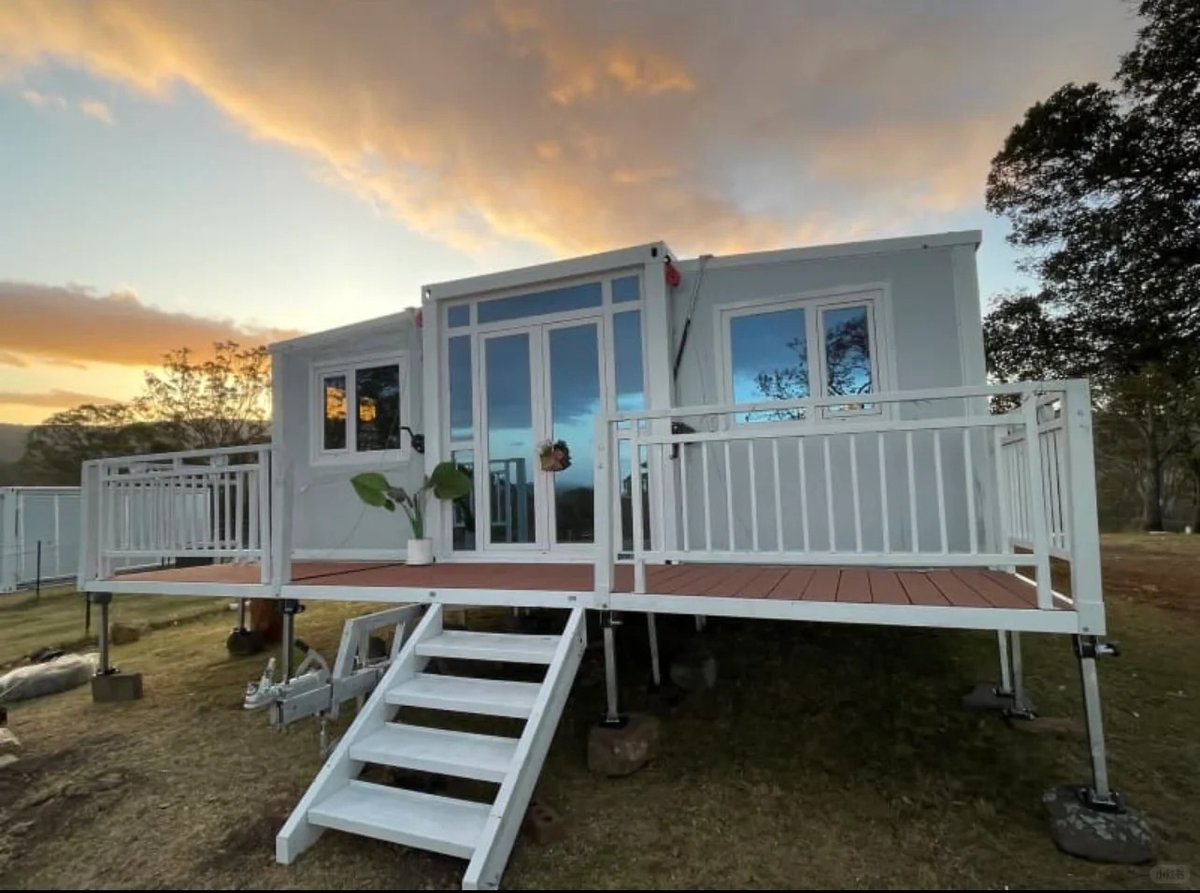
- Balcony and staircase for Australian Standards and NCC Compliance
- Australian electrical, plumbing, fire and energy efficiency to match NCC compliance
- Full engineering report confirming materials, wind, seismic compliance to various Australian Standards
- Certification and engineering certificate of compliance.
These compliance and conversion costs can easily be AUD $4,000 – $20,000+ in professional fees, certificate of compliance and local modifications. If you purchased the Australian-compliant ready units, it may only require a footing design + certificate of compliance, which costs around AUD $1,500 - $2750+GST.

Rough “Landed & Compliant” Total (Indicative)
Taking the above into account, a China-built 30ft NCC compliant expandable 2-bedroom modular home landed in Australia and installed could cost, on a typical project is as below:
Depending on the type of design, specifications, the manufacturers we worked with that already has Australian Standards compliance often costs from $30,000 - $45,000 (1 bedroom), $45,000 -$75,000 (2 bedroom) and $55,000 - $85,000 (3 bedrooms). These costs are landed and installed cost, excluding footing construction. Figures are approximate and depending on distance from port to site.
Rough “Landed & Compliant” Total (Indicative)
If you’re hiring an Aussie builder/contractor to do “footings + set-down + hook-up” (but not supplying the module), a realistic budgeting range is usually:
Typical builder/contractor cost (footings + install + connect)
1-bedroom (smaller, simpler set)
- $25,000 – $55,000
2-bedroom
- $30,000 – $70,000
3-bedroom (heavier / larger footprint / more services)
- $40,000 – $95,000
That range is driven by three big buckets: site works (foundations), cranage/placement, and services connections.
What you’re actually paying for
1) Footings / slab / stumps (site prep + foundations)
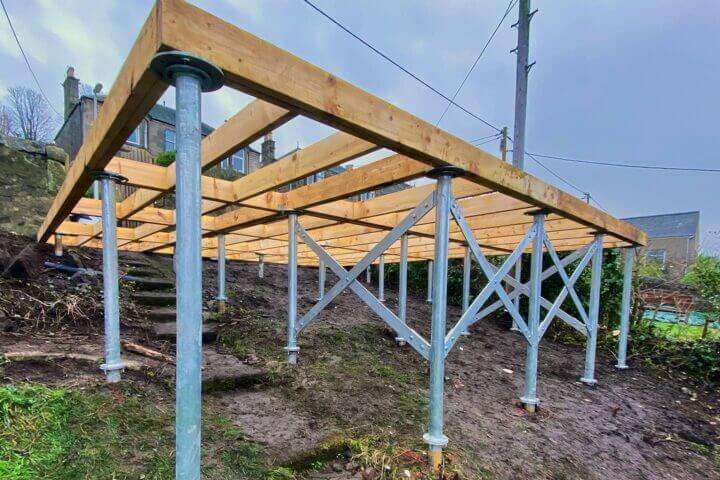
A lot of builders lump this as “site works”. For granny-flat style projects, many guides put site preparation + foundations commonly around $15k–$25k (varies heavily with soil, slope, access).
For modular homes, footing type matters:
- shallow piers / stump system (cheaper)
- bored piers (cost swings with access/rock)
- full slab (often dearer, plus excavation/spoil)
2) Cranage + placement (set-down day)
If the module is delivered and needs a crane:
- Cranes are commonly charged hourly with minimum hours; one modular builder guide quotes ~$260–$1,530/hour with 4–10 hour minimums (plus travel).
- Some modular suppliers also note crane costs often start around ~$3,000+ and vary by site/reach.
In practice, the “set-down day” can be: - ~$3,000–$8,000 for straightforward sites
- $10,000+ if reach/access/traffic control gets complex
3) Services connections (plumbing + electrical + drainage)
If services are close, a portable home supplier suggests connections can be ~$2,000–$3,000 (best-case).
But real-world granny flat connections can run higher depending on trenching, meters, and distances (especially for sewer and stormwater).
As a ballpark for hook-ups only (not full internal fitout):
- Electrical connection + compliance: ~$2k–$8k
- Plumbing tie-in: commonly $3k–$6k (can rise with trenching, pumps, septic, long runs).
- Stormwater management: anywhere from a few thousand to “it depends” (soak wells, detention, pits, easements, etc.)
The two biggest “gotchas” that blow budgets out
- Distance to services (sewer point is far away / need pump / need new meter)
- Bad access (can’t get truck + crane close → bigger crane, more labour, more time)
Quick budgeting shortcuts
If you just need a rough number for financial estimates or budgetting.
- Easy site (flat, services close, good access): $25k–$45k (1–2 bed), $35k–$65k (3 bed)
- Typical suburban site: $35k–$70k (1–2 bed), $50k–$95k (3 bed)
- Hard site (slope, rock, long service runs, tight access): $70k–$120k+ (can happen fast)
Typical TOTAL project estimates (what clients really pay)
For a 3-bed expandable overseas modular home:
That’s why people are shocked when a “$30k modular home” ends up being a six-figure project. Yes, the house is the more feasible, but the compliance, custom design and site compliance is not.
Australian-Made Modular Homes: Typical Price Ranges
So let's explore what it may look lilke if the modular homes are made in Australia. Based on recent Australian sources:
Base Cost per Square Metre
- From our understanding, a typical modular home cost: ~$ 2,500 – 3,000+ per m² for a complete build delivered to site (not including site works).
- Some higher-end modular systems (premium materials/design) can be up to ~AUD 4,000+ per m².
- Very luxury or architect-designed modular homes may push above these numbers.
Approximate Typical Home Prices
- Small modular (studio/1-bed): ~AUD 100,000+
- 2–3 bedroom modular homes: typically AUD 150,000 – 350,000+ depending on size, site, and finishes.
- Larger or high-end modular homes: AUD 400,000+
What These Australian Modular Prices Typically Include
Australian modular home pricing generally encompasses:
✔ Factory construction of the home (walls, roof, floors)
✔ Basic finishes (internal linings, cabinetry, some fixtures)
✔ Windows, insulation, doors, roofing
✔ Standard services prepared for connection
✔ Transport and installation (sometimes included in package)
✔ Many builders also include turnkey options for a higher price point
✔ Compliant construction to NCC/AS building standards
This is why the per-square-metre price is higher than just the overseas “empty shell” unit, you’re paying for factory finishes and compliance from the outset.
Australian modular homes cost more in factory construction because they are already built for local compliance and live-in readiness. Imported modular shells can be much cheaper upfront, but you incur local site and compliance costs anyway — and often need engineering/projects to meet Australian standards.
Why Australian Modular Can Be More Cost-Effective (Beyond Price)
Even though the headline price of a local modular home seems higher, many clients find that:
You get a turnkey solution, not just a shell
Australian modular suppliers usually deliver homes that only need utility connections — no major local retrofit required.
Compliance risk and certification hassles are bundled
Imported shells often need extensive local engineering and compliance work before council will accept them. That can erode cost savings, and takes much longer time.
Quality, warranties, and materials
Australian modular homes are built with local standards & warranties in mind, not just imported under basic specs.
The big difference is the factory-built module price and the compliance risk / rework risk.
Side-by-side cost comparison
Based on our experience, below is a side-by-side budget for a 30ft (approx. 50–57 m²) 2-bedroom imported unit VS locally made unit.
Assumption: 30ft expandable 2-bed is roughly ~50–57 m² floor area (typical for “2-bed” expandable layouts). Totals below exclude land and landscaping.
Summary: Do Overseas Modular Homes Actually Make Sense in Australia?
Overseas modular and expandable homes can work in Australia, but only when there is enough time and budget to achieve full NCC compliance. While the factory cost of imported modules is often very low, the local construction, installation, and compliance costs are unavoidable and frequently approach the cost of the module itself.
For basic or mid-range projects with flexible timelines, overseas modules can still deliver overall project savings. However, once higher-end finishes, structural upgrades, fire performance, energy efficiency, and certification are factored in, high-spec imported modules can end up costing a similar amount to entry-level Australian-made modular homes.
In practice, the choice is less about “cheap vs expensive” and more about risk, time, and certainty.
Overseas Modular Homes – Pros & Cons
✅ Pros
- Lower upfront factory cost
Imported expandable modules can be landed at a fraction of the cost of locally manufactured homes. - Flexible layouts and expandable designs
Overseas suppliers often offer innovative fold-out and expandable configurations that are not common locally. - Viable for patient projects
When clients allow time for engineering reviews, testing evidence, and local modifications, compliance is achievable. - Cost-effective for basic dwellings
For granny flats, temporary accommodation, or low-spec residential use, overall project costs can still be lower.
❌ Cons
- NCC compliance is not automatic
Structural capacity, wind loading, fire performance, energy efficiency, waterproofing, and services almost always require verification or upgrades. - Local construction costs are unavoidable
Footings, cranage, services connections, inspections, and builder margins are similar regardless of where the module is made. - Higher risk of cost creep
Missing documentation, non-compliant materials, or redesigns can quickly erode any upfront savings. - Longer approval and delivery timelines
Imported modules generally require more coordination between engineers, certifiers, councils, and builders.
Australian-Made Modular Homes – Pros & Cons
✅ Pros
- Designed to Australian standards from day one
Structural, fire, energy, and durability compliance are usually embedded into the system. - Lower approval and certification risk
Councils, certifiers, insurers, and lenders are generally more comfortable with local modular systems. - Clearer scope and inclusions
Pricing typically reflects a more complete, turnkey product. - Faster path to occupancy
Less rework and fewer compliance gaps mean shorter project timelines.
❌ Cons
- Higher upfront module cost
Australian manufacturing, labour, and compliance costs are reflected in the purchase price. - Less design novelty at the lower end
Expandable or fold-out concepts are less common in local mass-market offerings.
The Engineering Reality
From an engineering and compliance perspective:
- The ground and site costs are the same whether the module is imported or Australian-made.
- Compliance effort increases with uncertainty, not with country of origin.
- A high-spec imported module, once upgraded to meet NCC requirements, can approach the cost of a base-level Australian modular home.
Bottom Line (ArchiEng.au View)
Australian-made modular homes remain the lower-risk, faster, and more predictable option, particularly for clients who value certainty, financeability, and quicker approvals. At ArchiEng.au, we've had the privilege of working with clients on both Australian-made modular projects and other prefabricated options (including imported or container-based systems). Our experience as specialist engineers in structural design, compliance, and certification has shown us that both approaches can deliver excellent results. The key difference often comes down to managing expectations upfront.
For clients who need rock-solid certainty around timelines, budgets, approvals, and long-term finance—Australian-made modular homes frequently prove the smoother, lower-risk path. However, when expectations are clearly set, risks are fully understood, and timeframes are realistic, imported products can also be highly viable. They may suit budgets focused on cost savings, unique aesthetics, generous timeframe or specific site constraints.
Ultimately, the "best" choice depends on your priorities: Do you value maximum predictability and local compliance? Or are you open to exploring alternatives with a bit more management required? Either way, with proper planning, engineering support, and transparent communication, modular construction, we hsold be able tooffers a smart, modern path to homeownership in today's market.
If you're considering a project and want tailored advice on compliance, design, or risk assessment, feel free to reach out. We're here to help navigate what works best for your needs.
overseas modular homes Australia imported modular homes Australia expandable modular homes Australia container homes Australia cost prefab homes from China Australia modular homes NCC compliance imported prefab homes compliance Australia modular granny flat Australia cost expandable container house Australia overseas modular home cost Australia modular home cost Australia imported modular home total cost modular home site costs Australia modular home footing cost Australia modular home installation cost modular home crane cost Australia modular home services connection cost modular home builder cost Australia overseas vs Australian modular homes imported modular vs local prefab homes NCC compliant modular homes NCC compliance imported homes Australian standards modular homes AS1170 modular home wind design AS2870 footing design modular homes modular home engineering certification modular home structural certification Australia modular home certifier requirements modular home building approval Australia modular home council approval Australia expandable container homes Australia 3 bedroom expandable container home expandable prefab house Australia fold out container house Australia container granny flat Australia shipping container house Australia modular container home compliance expandable modular house cost expandable prefab home Australia container home NCC compliance modular homes Victoria compliance modular homes NSW approval modular homes Queensland approval modular homes South Australia approval granny flat modular Victoria modular granny flat NSW prefab granny flat Queensland modular homes PlanSA modular homes CDC NSW modular homes building permit Victoria modular home footing construction bored pier footing cost Australia slab vs pier modular home modular home site works cost modular home builder requirements modular home installation process modular home set down cost modular home cranage requirements modular home construction timeline modular home build process Australia are overseas modular homes worth it hidden costs of modular homes why modular homes cost more than expected modular home real cost Australia modular home budget breakdown imported container home risks modular home compliance issues Australia modular home approval delays modular home certification problems modular home engineering checks modular granny flat investment Australia modular granny flat cost breakdown expandable granny flat Australia backyard modular home Australia modular rental dwelling Australia modular second dwelling compliance modular small second home Victoria modular ancillary accommodation SA modular granny flat builder Australia modular home return on investment modular home engineering consultant modular home compliance engineer modular home structural engineer Australia modular home certification services imported prefab engineering Australia modular home peer review engineer modular home design certification modular home approval consulting modular construction compliance Australia prefab home engineering Australia
.png)
.png)
.png)
.png)
.png)


.png)

.png)


.png)

.png)


.png)
.png)


.png)


.png)


.png)
.png)

.png)
.png)
.png)
.png)

.png)


.png)


.png)

.png)
.png)
.png)
.png)
.png)
.png)
.png)
.png)
.png)
.png)
.png)


